Blog


The impact of VOC A+ certification on air quality and the health of workers in underground cellars.

The impact of VOC A+ certification on air quality and the health of workers in underground cellars: scientific evidence and organoleptic benefits for wine.

First and foremost, the VOC A+ certification of Biopietra cladding guarantees healthy air in underground spaces. Furthermore, it ensures ideal conditions for the development of the wine’s qualities and protects the health of the workers there.
Authoritative scientific sources
From a strictly scientific point of view, wine naturally “breathes” through the cork, allowing gas exchange with the surrounding environment.

Wine breathes through the cork, allowing gas exchange with the surrounding environment. Numerous scientific studies confirm that volatile compounds present in the cellar air can be absorbed by the cork and transferred into the wine.

The contamination of wine through the absorption and release of volatile organic compounds (VOCs) from building materials and corks is a phenomenon recognised and documented by highly authoritative scientific bodies.

Among these, the Catholic University of Piacenza and the Australian Wine Research Institute stand out for their targeted research: the former has studied the indirect transfer of VOCs from coatings (Off-flavours through indirect transfer of VOCs from coatings), whilst the latter has investigated the absorption of TCA and VOCs by corks. These, among the many authoritative sources available, clearly demonstrate how essential the use of certified, low-emission materials is to safeguarding the organoleptic quality and healthiness of wine.

Technical value of VOC A+ certification

In light of the evidence from the scientific literature and established industry practices, VOC A+ certification represents a tangible asset for boutique wineries. From a technical and health perspective, it serves as a benchmark for controlled and healthy ageing environments. The olfactory neutrality guaranteed by low-emission materials is not merely a theoretical advantage.

Various studies confirm that environmental volatile organic compounds, if left unmanaged, can alter the wine’s aromatic bouquet through indirect contamination mechanisms.

Underground environments and VOC management

In this context, in underground environments where air exchange is limited, the risk of VOC accumulation is greater. This makes it essential to use certified coatings, which help to maintain the ideal microclimate for both the product and the operators.

Sources: U.S. EPA – Indoor Air Quality & VOCs, World Health Organization – WHO Indoor Air Quality Guidelines, Fumi et al., Food Additives & Contaminants – contamination from building VOCs, Springer – evolution of volatile compounds in wine depending on the environment..


Protecting workers’ health

Protecting workers’ health is an essential consideration.
Reducing VOC levels means lowering the risk of respiratory irritation, headaches and neurological effects, as highlighted by leading international health organisations, including the National Institute of Environmental Health Sciences (USA).

In this sense, the choice of A+ materials is not only a guarantee of the wine’s organoleptic quality, but also an investment in the safety and well-being of those working in the winery.

Protection of biological processes and wine maturation

Another often underestimated strength is the protection of delicate biological balances governing wine maturation. There are no guidelines definitively establishing a link between VOCs and damage to yeasts.

However, many volatile compounds are well documented for their antimicrobial activity. These compounds can interfere with sensitive biological processes involved during wine ageing. Choosing low-emission materials helps avoid interfering with the delicate biological balances of ageing processes. This represents an added value for producers striving for absolute quality.

VOC A+ certification for distinctive market positioning

From a market and reputation perspective, A+ certification fits perfectly with the principles of green building and “luxury wine”: international protocols (LEED, WELL, BREEAM) reward low-VOC materials, and the narrative of a healthy, sustainable winery becomes a distinctive feature in regional marketing and product storytelling.

Therefore, choosing Biopietra and VOC A+ cladding is not merely a matter of aesthetics or compliance, but a strategic investment in the quality, health and value of the wine cellar.

Want to create a unique and healthy wine cellar? Discover Biopietra’s projects and transform your space!


For information on the health benefits of Biopietra cladding, please email info@biopietra.com

Discover our projects

Read the online article in the prestigious magazine ‘Materiali casa’ 

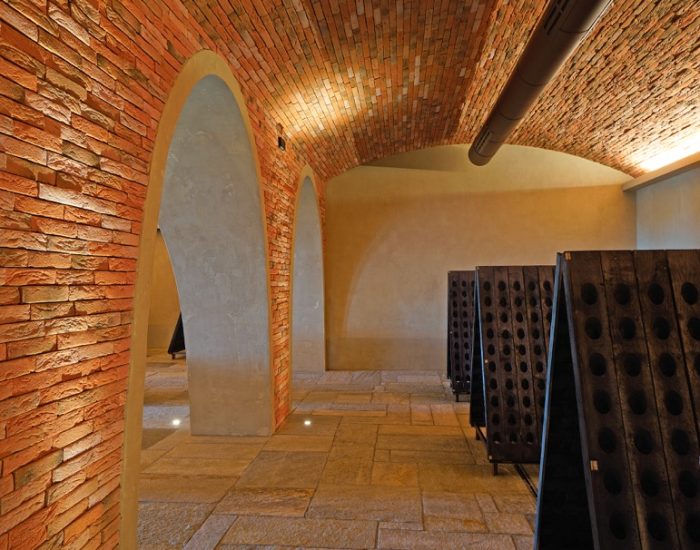
See our natural regenareted stone cladding in a special project: Varignana Winery
Designing with Certified Sustainable Green Building.

Designing with Certified Sustainable Green Building

Today, designing with certified sustainable green building is no longer just about choosing a shape or a material.
It means making informed choices that improve quality of life, reduce environmental impact, and ensure real-world performance over time.

In this context, certified sustainability becomes a true design criterion.
Not a slogan, but a concrete and verifiable guarantee.


Why certified sustainable green building really matters

Contemporary green building is based on objective and measurable data.
Certifications, laboratory tests, and recognized standards allow for the assessment of a project’s true quality.

In fact, choosing certified materials means protecting people’s health.
At the same time, it helps preserve the building’s value and offers greater peace of mind to designers and clients.


Indoor Air Quality in Certified Green Building

One of the most critical aspects of modern design concerns indoor air quality.
In fact, many materials can release volatile organic compounds that negatively impact occupants’ well-being.

Biopietra cladding is VOC A+ certified, the most stringent class regarding indoor emissions.
As a result, they ensure healthy environments, free of formaldehyde, aggressive chemical resins, and harmful substances.

This represents a tangible benefit for residential spaces, hospitality environments, schools, wineries, and workplaces.

👉 Learn more about Biopietra’s VOC A+ certification


Certified sustainable green building and LEED credits

Sustainability also involves the responsible use of material and energy resources.
Biopietra is created from recycled raw materials and significantly reduces the consumption of natural resources.

For this reason, it contributes to LEED credits, one of the most widely recognized international protocols for sustainable building.
For the designer, this means adding environmental, technical, and cultural value to the project.

Furthermore, alignment with global standards makes the project more competitive and credible.

👉 Read about sustainability and LEED credits for Biopietra

Certified technical performance and long-term durability

Certified sustainability does not compromise technical performance.
On the contrary, it makes these performance characteristics verifiable and long-lasting.

Biopietra cladding ensures proper breathability of the masonry.
This allows the walls to breathe and reduces the risk of condensation and delamination.


Certified Green Building and a Shared Vision

Biopietra is a member of the Green Building Council Italy, the network that promotes a culture of sustainable building.
Being part of the GBC means contributing to the development of a new way of building.

An approach based on dialogue, innovation, and a focus on the future of the built environment.

Building the future of sustainable architecture today

Certified sustainable green building represents the new frontier of contemporary architecture.
An approach that prioritizes people’s well-being, the life cycle of materials, and the verifiable quality of projects.

The future is built today, through informed choices and materials that truly make a difference.

Discover our projects

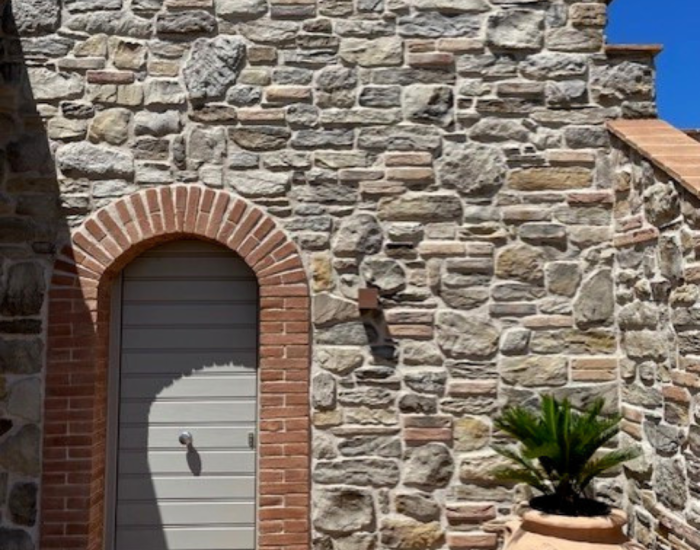
See our natural regenareted stone cladding in a special project: Varignana Winery
For information on the health benefits of Biopietra cladding, please contact us

Regenerated natural stone cladding on thermal insulation: beauty, efficiency and regulations.

Regenerated natural stone cladding on thermal insulation: beauty, efficiency and regulations.

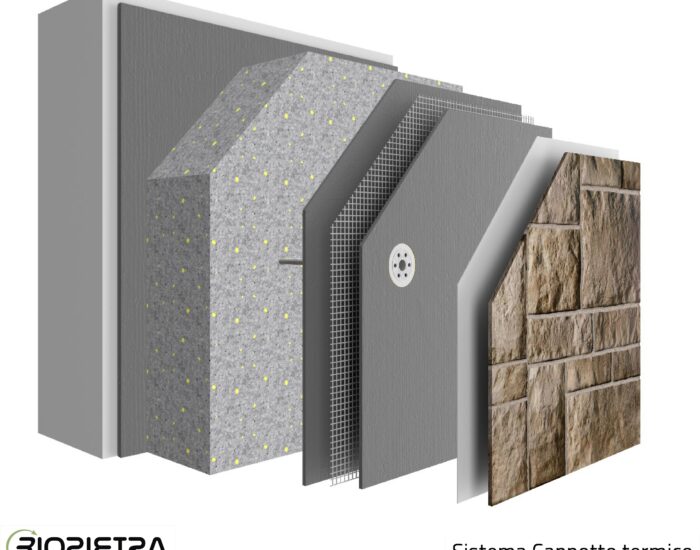
In contemporary architecture, the main challenge is not only to insulate, but to do so while ensuring health, durability, and aesthetics. The External Thermal Insulation Composite System (ETICS) is now the standard for energy efficiency, but the question often arises: is it possible to combine thermal protection with the timeless charm of stone?

The answer is yes, provided you choose technologically advanced solutions such as Biopietra regenerated natural stone, specifically designed to integrate with modern insulation systems in complete safety.


THE REGULATORY CONTEXT AND GREEN BUILDING

Today, designing means complying with strict regulatory standards. In Italy, the UNI 11715:2018 standard defines the criteria for the correct design and installation of thermal insulation, while compliance with LEED standards and CE marking (which Biopietra boasts as double certification, unique in the sector) guarantee the structural quality of the materials.

Biopietra fits perfectly into this framework, as it is a certified material for green building. Unlike common reconstructed or ecological stones, regenerated stone is free of harmful emissions (VOCs), formaldehyde, and chemical resins, complying with the fundamental breathability parameters to prevent interstitial condensation and mold.


WHY CHOOSE BIOPIETRA FOR THERMAL INSULATION?

Breathability and living comfort

One of the risks of “non-breathable” coatings on insulation is the creation of a vapor barrier. Biopietra has a high breathability index (μ 5-15), which allows the wall to “breathe.” This not only protects the insulation but also improves the hygrometric comfort inside the rooms. It prevents condensation from freezing during the winter, expanding and causing the stones to detach.

Reduced weight and thickness

Applying stone to an insulating panel requires lightweight materials. Our regenerated natural stone, with thicknesses ranging from 1 cm to 3.5 cm, reduces the static load on the facade, making it safe to install on substrates such as EPS, rock wool, cork, hemp lime, or wood fiber.

Mechanical protection and thermal inertia.


BIOPIETRA CLADDING ACTS AS A REAL “SHIELD.”

Impact resistance: it protects the insulating layer from hail and mechanical stress.

Thermal phase shift: thanks to its mass, it increases the thermal inertia of the wall, improving the building’s summer performance and keeping rooms cool for longer.

Fire safety: the products are certified in Class A1 (non-combustible), a fundamental requirement for the safety of facades in multi-story buildings.


CERTIFIED INSTALLATION: BIOPIETRA’S SYSTEM

To ensure durability over time, installation on insulation follows a strict protocol:

Mechanical fastening: use of specific anchors that pass through the reinforcement mesh.

Eco-friendly adhesives: use of breathable adhesives such as Eco-Koll, which ensure perfect adhesion without altering the green building properties of the system.

Biofin treatment: for extra protection against smog, mold, and humidity, keeping colors unchanged over time.


AN INVESTMENT THAT INCREASES THE VALUE OF YOUR PROPERTY

Choosing Biopietra regenerated natural stone cladding for your thermal insulation is not just an aesthetic choice. It is a strategic decision that increases the market value of your property, guarantees its longevity, and respects the environment and the health of those who live there.

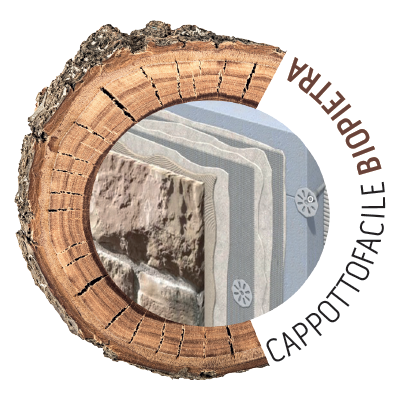
Biopietra easy external insulation


Biopietra cappotto facile esterno

TECHNICAL FOCUS | BUILDING PHYSICS AND THE “CAPPOTTOFACILE” ETICS SYSTEM

Stone cladding is often considered merely an aesthetic complement. In reality, the integration of regenerated natural stone into the insulation system performs three crucial physical functions that protect the integrity of the entire property in the long term:

Thermal shock management

Plastered facades are subject to extreme temperature fluctuations (they can go from 0°C to 60°C in a few hours in direct sunlight), causing micro-cracks. Thanks to its refractive capacity and mass, Biopietra regenerated stone acts as a thermal flywheel, stabilizing the temperature of the insulating layer and preventing stress cracks.

Dynamic permeability

Unlike many synthetic claddings that “seal” the wall, the “CappottoFacile” ETICS system maintains open porosity (breathability µ 15). This allows any residual moisture inside the wall to be managed, eliminating the risk of detachment due to vapor pressure, a common problem in non-certified systems.

Mechanical resistance to atmospheric agents

Extreme weather events (such as intense hailstorms, which are becoming increasingly frequent) can permanently damage a simple smooth coat. The density of our stone offers superior impact resistance, acting as a protective armor that preserves the efficiency of the underlying insulation panels for the entire life cycle of the building.

The combination of lightness (reduced thickness) and certified mechanical fastening makes the system compliant with European directives on facade safety, ensuring that the initial investment does not turn into extraordinary maintenance costs after a few years.

Are you a designer or a construction company? Contact us to receive the complete technical documentation and find out how to integrate our solutions into your next energy renovation projects.


You can find all the information about “CAPPOTTO FACILE” on our website. 

Read the EDILPORTALE online press article to find out how our Biopietra cladding is ideal for external insulation systems