
When we design a space, we think about volumes, light, materials and proportions.
Increasingly, however, another factor comes into play – one that is less visible but nonetheless fundamental: the quality of the air we breathe indoors.
In enclosed spaces, in fact, a significant proportion of indoor pollution does not come from outside, but stems directly from the materials we choose: cladding, finishes, adhesives and components that, over time, can release unwanted substances into the air.
Volatile Organic Compounds (VOCs) are among the main culprits behind this phenomenon. These are substances which, once emitted, can accumulate in indoor environments and affect the comfort and well-being of those who spend their daily lives in these spaces. This is why indoor air quality is no longer a ‘secondary’ issue, but a genuine design parameter.
Alongside VOCs, there has been increasing talk in recent years of PFAS, persistent chemicals used in various industrial processes for their binding and protective properties. Their critical nature stems from their persistence over time and the difficulty in breaking them down, which is why there is a growing focus on PFAS-free materials, particularly in projects where health and well-being are key priorities.
The emission performance of the products is verified through laboratory tests and documented in technical data sheets, in accordance with the main European standards for indoor air quality, such as the UNI EN ISO 16000 series, which is now increasingly referenced in tender specifications and project reports.
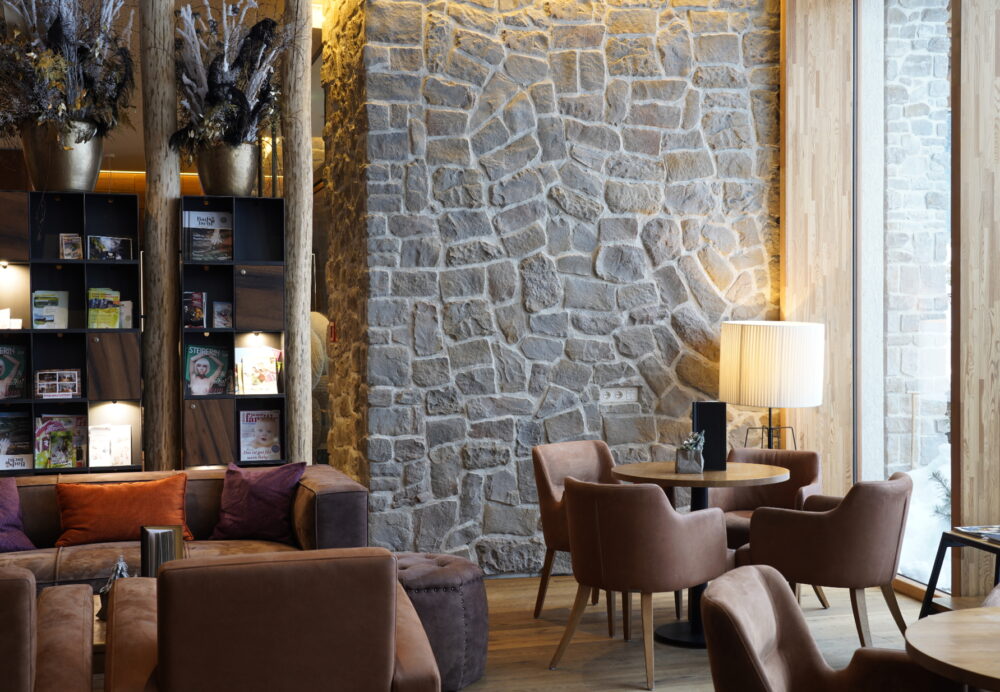
Whether it is a private home, a hospitality project, a spa or a high-traffic communal space, the choice of a wall covering is never purely aesthetic: it contributes to the indoor microclimate and the quality of the living experience.
That is why we have compiled the main regulatory references on the subject in a dedicated guide.
For any further information, please contact us -> Click here