
Matter as a link between XLAM technology and the rural landscape
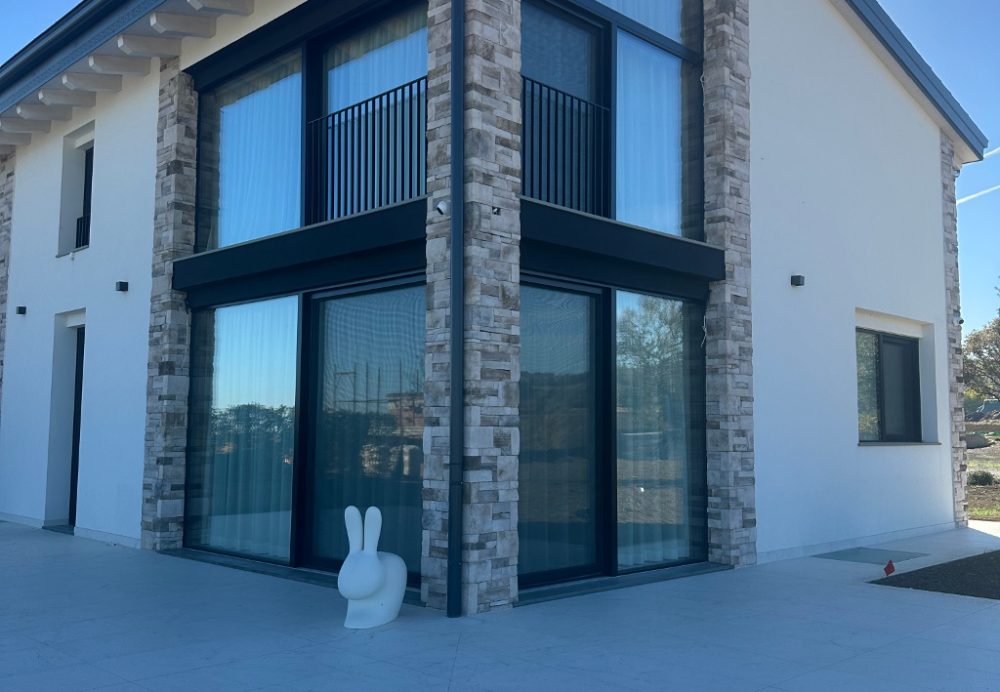
Set in the hills of Modena, Casa P+T is the result of the conversion of an old farmhouse into a semi-detached house featuring an XLAM structure, high energy efficiency and a strong connection to the local area. In this project, architect Elena Tassi interprets the dialogue between contemporary architecture and the rural landscape through a measured reinterpretation of local building traditions. Biopietra cladding becomes a key element in defining the volumes, anchoring the new building to its surroundings and combining material quality, technical efficiency and living comfort.
Article title: Casa P+T
Magazine: Materiali Casa
Publication date: 04/2026
Project curated by: Architect Elena Tassi
Browse the article!
Materiali casa_Aprile 2026_compressedCasa P+T: contemporary design rooted in Modena’s countryside
Set in the hills of Modena, where rural farmsteads, porticos and barns have long shaped a distinctive landscape of fired brick and local stone, Casa P+T reconnects XLAM technology with its agricultural context. Within this setting, the project replaces an irreparable existing rural building while, at the same time, using historic typologies as a guide for the new volume. As a result, the semi‑detached villa delivers a measured reinterpretation of local forms and proportions.
XLAM structure and high‑performance envelope
From a technical standpoint, the building relies on a dry construction system with cross‑laminated timber panels (XLAM / CLT), enabling high thermal performance and an energy‑efficient envelope. Consequently, Casa P+T provides modern living comfort and low energy demand without losing continuity with the rural landscape. However, combining a “solid” material expression with a highly insulated timber structure introduces strict constraints: full‑weight natural stone or solid brick would add excessive loads and thickness, conflicting with external insulation and today’s performance targets.
Biopietra cladding as the link between technology and place
For this reason, Biopietra regenerated natural stone cladding becomes the key connector between architecture and landscape. In particular, the Empoli pattern recreates the mixed rural texture of the area while keeping reduced thickness and low weight, allowing safe bonding directly onto the thermal insulation without heavy mechanical fixings or thermal bridges. Moreover, Biopietra’s high breathability supports the hygrothermal behavior of timber walls, helping to prevent interstitial condensation and maintain stable moisture balance.
Durability and indoor health in sustainable architecture
Finally, certified resistance to fire, freeze–thaw cycles and hail, together with zero harmful VOC emissions, completes a project that combines sustainable architecture, durability and material authenticity.